Archive

Posts Tagged ‘bandwidth’

1.84MB/sec upload rate is great news for the social Web in SA

January 12th, 2010 Comments

I am working at the airport for a couple hours this morning after dropping a relative off for a flight back home. The traffic heading back to Joburg is hideous so its worthwhile working here for a bit.

I just connected to Internet Solutions’ AlwaysOn hotspot at the Mugg & Bean at OR Tambo airport and I did a Speedtest like any geek would on connecting to a new hotspot and was pleasantly surprised by the upload speed for a change:

High upload rates are really important for the social Web which often involves more uploading than downloading. Current upload rates on ADSL are frequently miserly and this only stifles social media adoption when users are faced with slow uploads to popular social networks.

I’m going to upload something just to experience the boost in speed before returning to my usual upload trickle.

Seacom gets fancy in Sandton

October 15th, 2009 Comments

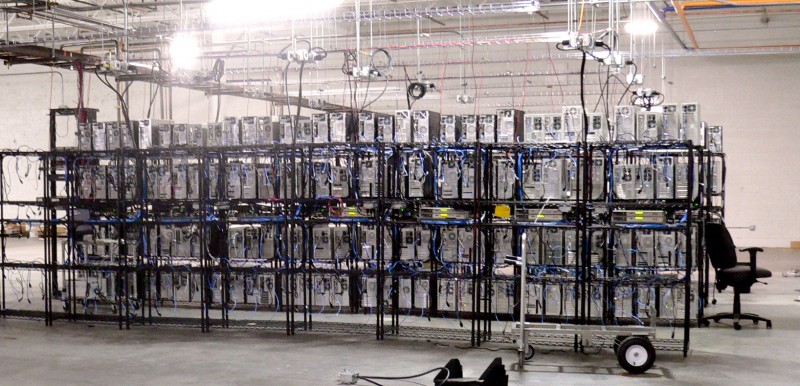
I’m at the Seacom event at Nelson Mandela Square in Sandton and I thought I would do a quick post here using the bank of computers lined up for our use.  I captured the initial speeches using Qik and my N97 which you can watch below here.

There wasn’t any public wifi available but we did get a chance to use the computers connected to some location in the UK to test out the bandwidth. I was expecting something spectacular but the highest download rate I saw was around 7 or 8MB/sec down. I did see some pretty impressive upload speeds (around half the download speed) but that was about it.

A couple of Seacom’s partners were also there showing off their tech, taking advantage of the Seacom bandwidth. I walked around a little with my N97 to give you an idea what is available at the event:

On the whole it was more about Seacom’s promise but as Simon pointed out when we were chatting, there is still a long way to go before people at home can benefit from all this promise.

I did have a chance to chat to Neil Meintjes who is running Internet Solutions’ Plugg, its consumer facing connectivity solution. I gave Plugg a miss when I took a look at it a short time ago because its ADSL was priced at R79/GB. The price has apparently been dropped to about R65/GB which is still a little high compared to Axxess and G-Connect (around R59/GB and R45/GB to R49/GB respectively) and certainly a lot higher than Afrihost with its current special offer of R29/GB but Neil said he is working on a number of value adds which could make Plugg a lot more attractive as an overall product. I also asked him if he has been sued over the logo which looks a lot like Fring’s. He says he gets that a lot.

Thoughts about the Seacom cable: what it isn’t and what it can be

June 5th, 2009 Comments

In a way our trip to Mtunzini to visit the Seacom landing station on 28 May 2009 was a great analogy for the Seacom cable’s impact on South Africa’s degree of connectivity to the Internet. It took us about 2 hours to fly from Johannesburg to Durban and back again and about double that amount of time in a bus travelling to the presentation in Ballito, the site itself and back to Durban International. Put another way, South Africa is poised to boost its bandwidth more than tenfold from its current capacity when the Seacom cable goes live in the coming months. This is a big thing for South Africa although it isn’t quite what the hype has led us to believe.

The hope has been that when someone flips a switch at the end of June 2009 we will see prices drop by an order of magnitude; we will all be able to view YouTube videos without buffering first; Telkom’s monopoly will be thwarted and we will have abundant bandwidth, government will operate efficiently and honestly and all will be right with the world. Unfortunately many of these hopes will be dashed and the immediate effect of the Seacom cable going live will be more gradually felt in South Africa.

That being said, the Seacom cable will eventually facilitate a very different Internet experience for a great many South Africans who should see prices for their data drop noticeably. There have already been a number of price reductions, probably in anticipation of Seacom’s arrival, so we can realistically expect prices to drop a further 40% or so from their current levels in the coming months and years. The shift to a fibre connection from a predominantly satellite connection should mean better quality connections which more technical people can explain using terms like latency and so on.

Aside from the eventual benefits, I found Seacom’s CEO Brian Herlihy’s talk about open access particularly appealing. While some of his presentation is what you would expect from a marketing pitch, he spoke quite passionately about how the Seacom cable’s tremendous bandwidth could help under-serviced communities leapfrog older connectivity options and reap the fruits of a high-speed Internet connection. He talked about communities in Rwanda laying fibre optics cables inland which will help transmit the cable’s 1.28tbps (terabits per second) to schools, villages and cities. This kind of connectivity could be the catalyst for an African Google and create a truly level playing field where Africans can better compete with the rest of the world.

Another thing the Seacom cable may well help achieve is a shift in mindsets about Africa and its data usage. Africa is apparently perceived largely as a “voice” market because data is traditionally too expensive for widespread adoption. The cable could help change this through reduced data prices. It also helps that the African countries who will be fed by the cable have committed to its success.

In South Africa powerhouses such as Tata, Neotel and Internet Solutions are “anchor tenants” and our mobile networks are in the process of establishing the infrastructure necessary to tap into this firehouse when it turns on. We may not see price reductions right away but the industry is definitely about to change dramatically. This degree of broadband will also mean a different experience of the Internet. As Herlihy put it, “real broadband is about dynamic media”, not just web pages and embedded videos.

There are a number of unrealistic expectations of the Seacom cable and, at the same time, a tremendous amount of promise. It will change our Internet consumption patterns (barring even more collusion from the networks and more rampant profiteering at any rate) and quite possibly change the South African economy itself.

Take a look at Mr Chetty’s post about the Seacom media event for more information about the trip and the cable itself while you’re reading about Seacom. Great post!